
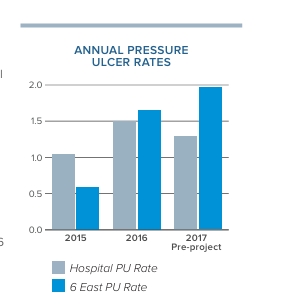
 Hospital-acquired pressure Injuries (HAPIs) have long been a challenge in healthcare, particularly in high-acuity units where patients are more vulnerable to prolonged immobility. These injuries can lead to severe complications, increased patient discomfort, and longer hospital stays. Roper Hospital, part of Roper St. Francis Healthcare in Charleston, SC, faced rising HAPI rates in their 6 East medical-surgical unit. Determined to find a solution, the hospital implemented the Hercules Patient Repositioner™, an innovative tool designed to simplify patient boosting alongside a targeted change in nursing practices. The results? A dramatic reduction in HAPI incidence to zero over five months.
 Roper Hospital is known for its patient-centric care, earning accolades like the Healthgrades Outstanding Patient Experience Award and ranking among the Top 100 Hospitals by Truven Health Analytics. However, in 2016, their 6 East unit, which houses high-acuity patients with long hospital stays, experienced a sharp increase in HAPI incidence. With Braden Scores—used to assess the risk of pressure injuries—ranging between 7 and 12, these patients were highly susceptible to pressure injuries due to immobility and extended periods in bed.
For nurses, the traditional methods of boosting patients were cumbersome, time-consuming, and posed risks of injury to caregivers. Finding additional staff for manual repositioning was often difficult, adding to the challenges of providing frequent, timely patient care. This combination of factors contributed to higher HAPI rates, which demanded a better, more efficient solution.
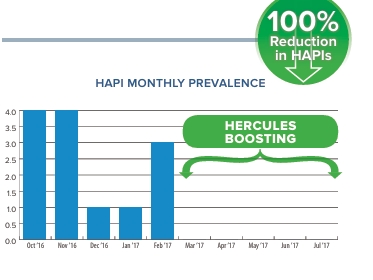 By the end of the 20-week study, the results were extraordinary. The unit recorded zero HAPI cases for five consecutive months, and this success continued for an additional two months beyond the study period. The simplicity of using the Hercules Patient Repositioner™ and a change in nursing practices led to eradicating pressure injuries in the 6 East unit.
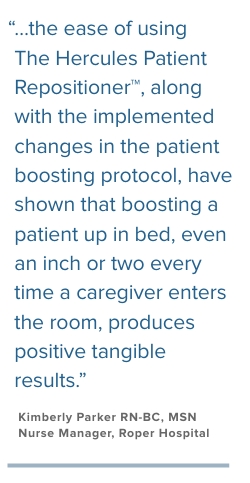
Kimberly Parker, RN-BC, MSN, noted that this new standard of care had become second nature for the nursing staff. “Boosting patients frequently, even a small amount, made a significant difference in patient outcomes. It was clear that eliminating the barriers to traditional boosting could positively impact both our HAPI rates and the patient experience,” she explained.
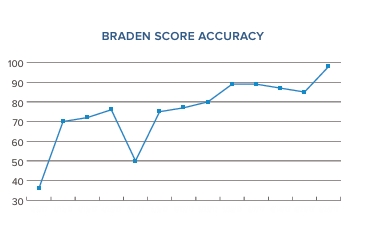 While the primary goal was to reduce HAPI rates, the study revealed several additional benefits:
- Improved Braden Score Accuracy: Frequent repositioning allowed caregivers to assess skin risk more accurately, leading to more precise Braden Scores for patients. This improvement helped the team better tailor care plans for high-risk individuals.
- Increased Patient and Family Satisfaction: Many patients and their families reported that the Hercules system significantly improved comfort during their stay. Boosting, once painful, became nearly invisible, resulting in more positive patient feedback.
- Enhanced Caregiver Well-being: The use of the Hercules system also positively impacted staff morale and safety. By reducing the physical demands of manual boosting, the hospital demonstrated its commitment to protecting the health of its caregivers, reinforcing a culture of care and safety.